




Today we have a very special guest at Stinger Magazine, namely Nobumichi Kumabe( 隈部宣道). Programmer of the Toukiden series, Development Director of Persona 5 Strikers and most importantly Director for Stranger of Paradise: Final Fantasy Origin and Rise of Ronin for teamNINJA.

After a brief exchange on social media, we hit it off and had a great talk, which led to this interview. I would like to take this moment to thank users Nepu47 and Khayyaam for their work on translating the interview from its native Japanese. For those interested in the original Japanese text, it will be offered as a download at the bottom.
The format of the interview will be:
[ Speaker: spoken text (note from editor) ]
Due to obvious contractual reasons, certain elements could not be discussed, so if there’s a specific question that makes you feel “ah, why didn’t he ask that”… well there’s a solid chance that I did (haha).
Stinger: First off all, welcome, it’s great to be able to have this interview with you. Many of our readers, and myself, are big fans of games you’ve worked on! Let’s start at the beginning, could you give some insight into how you got started within the industry.
Nobumichi Kumabe: I had a unique illness when I was 6, so I was in a hospital for about a year. There was another kid there and we played Sonic while hiding from the nurses` eyes and it gave my smile back again. Through this experience I thought that making games enriches someone`s life, so I decided to become a game creator. After joining KOEI ω-Force studio Inc. in 2009 I worked longer hours than others and focused on game creation as my passion. Also, since I played games since my youth, I was a bit better than others at them, so I actively tested the company`s games and was able to speak opinions in the perspective of a hardcore user.
While I started as a programmer at KOEI ω-Force studio Inc., mostly helping with the porting of past projects, I later-on got added to the Toukiden (討鬼伝) project where I worked as a planner (a planner is similar as a game-designer in the west) and programmer for both Toukiden Kiwami and Toukiden 2. I had a wide range of tasks, like constructing enemy control systems, AI systems, building the progression/RPG elements, tuning the companion AI data and so on.
Because of my experience as a gamer, core systems in Toukiden like Mitama and Battle Styles were made. This led to me becoming both a designer and a programmer. After becoming a director years later, I even returned my days-off for the sake of embedding and tuning data on my own, but I also learned that I should raise junior staff to elevate the quality of games, it is not enough to just work by myself.

Stinger: And after Toukiden you went to Persona 5 Strikers, correct?
Nobumichi Kumabe: Yes. In between I experienced some other projects briefly, and then I was assigned as programmer to Persona 5 Strikers. Though my position was changed to Development Director later-on. I directed all sections except stories and events.
Stinger: How did that lead to your directorial debut with Stranger of Paradise: Final Fantasy Origin (SoPFFO or SoP for short from now on)?

Nobumichi Kumabe: I loved the Final Fantasy series during my school days, especially Final Fantasy XI. When DISSIDIA was in development, even though I wasn’t part of the development team, I was very involved and devoted to the project. In development, Shantotto’s Staff only had one color, but I requested again and again for it to change colors when you use magic like in DISSIDIA on the PSP, I persisted and finally got them to change it to a rainbow staff. Those events guided me to be chosen as a development member when there was a talk about SoPFFO, transferring me to teamNINJA. I was in charge of the overall combat, usually focusing on action elements and progression elements.
Stinger: Before we get into SoPFFO in detail, you mention Sonic giving you a lot of joy in your youth, did you ever have ambition to work on similar platformers or work for Sega in particular?
Nobumichi Kumabe: Sonic was just a starting point, I didn`t have any specific titles that I wanted to make at the time. I considered working at other companies when I was a university student, but thanks to Koei-Tecmo raising me when I have no idea about game creation, I don`t have any plans to work at other companies currently.
Stinger: Can you give a bit of insight into your direction for SoPFFO?
Nobumichi Kumabe: There were many themes, but for me, the design theme was not making “Final Fantasy as a RPG with adding action game elements” but making “Final Fantasy redesigned as an Action game” and I followed this principle when it comes to deciding directions and designs. Also, I wanted that users would experience a narrative of Jack Garland through gameplay.
I think that tinkering with the Job system was very fun in the Final Fantasy series, so I also brought back action elements and progression systems from Persona 5 Strikers and Toukiden, making users perform various actions in many ways. If you liked builds of SoP then please play the Toukiden series too, you will love it!
There were various receptions when it was released, but I checked all of them whether they were good ones or bad ones and decided to provide unique value by focusing on hardcore users. We, being me and development members, ended up providing huge volumes of contents as DLC, more than what we planned to in the first place. I guess that this game forever remains in some hardcore user’s hearts due to that.

Stinger: You mentioned earlier that Final Fantasy XI is your favourite, why is that? Do you still play it by the way?
Nobumichi Kumabe: It was released when I was a high school student and it was my first online game. I remember feeling like I was adventuring through a real world, I was very immersed. I am not playing Final Fantasy XI nowadays, but including idling, I almost played 3500 days. I almost abandoned my life to it. I was really messed up (laughs).
Stinger: TeamNINJA is a studio with a rich history that went through a lot and had just had a well-deserved big hit with Nioh 1 and 2. What was it like working with them?
Nobumichi Kumabe: I personally learned a lot. In creating action games, they are able to verbalize what I was perceiving subconsciously. I think this is an experience that only TeamNINJA, with its accumulated know-how in creating action games, can offer.
Stinger: Since SoPFFO used the Final Fantasy license, were there concepts you wanted to put into the game that you couldn’t because it had to fit as a Final Fantasy game?
Nobumichi Kumabe: I can`t talk much about this in detail, but there was nothing we couldn`t add because it would not fit Final Fantasy. The focus from the start though was designing Final Fantasy as a good action game. On the top of that, we borrowed good elements from already existing titles when we were in development.
Stinger: Action RPGs have a rich history, what games did you look to for inspiration when making SoPFFO? Many casual observers would point out surface-level similarities to Nioh and Dark Souls, but I would assume there are deeper ones.
Nobumichi Kumabe: The base of the game is based on the Nioh series, but the customization is based on Toukiden, even some of the data for balancing builds were re-used from that series. Toukiden is a hunting-action game, with a focus on controlling and managing multiple characters. So I used Final Fantasy V, XI, League of Legends and Trading Card Games as references and thought about how I could translate them into an action game when I worked on Toukiden. As a result SoPFFO was more based on Toukiden I would say.
Stinger: SoPFFO is both extremely in-depth as well as very representative of the Final Fantasy series and all the classic status effects, buffs, abilities like jump and doublecast are represented in some way. Were there any particular challenges, opportunities that stood out, stuff left on the cutting room floor?

Nobumichi Kumabe: There was no specific obstacle. I really liked the numbered Final Fantasy series and played them all, so I would plan things for SoPFFO without much research. I did notice that many little details and easter eggs that we put into went unnoticed, but there are so many of them! I want to share a few:
Barbariccia is a boss in Final Fantasy IV that will occasionally turn into a tornado and counter all attacks. The solution is to have Kain, a dragoon, use Jump, which makes him go down the center of the tornado and force her out of it. When fighting Tiamat in SoPFFO (which takes place in a level inspired by the Tower of Babil from FFIV) she can put up a wind-guard shield to counter attack you. The Dragoon Job’s ability ‘Jump’ is the only physical attack she won’t be able to counter, as a reference to the Barbariccia boss.
Other than that, the Elemental Core boss from SoPFFO is based on Enki and Enril from Final Fantasy XIII, with both enemies having each other’s weakness as an element. While the Iron Giant’s elemental enchantments were based on Kam’lanaut from Final Fantasy XI.
Stinger: Speaking personally, what is your favorite build, weapon and job to use in SoPFFO?
Nobumichi Kumabe: I tried to balance all the Jobs until I felt satisfied, so I want to say that I like them all but… as you saw in my video I like the Summoner Job the most.
The action elements in the Trials of the Dragon King DLC were balanced by me. I think it’s fun because you can incorporate various combos for regular enemies like in the Warriors series, and it’s easy to use Soul Shield for bosses because of less break consumption, and it feels different when you fight with Bahamut, so I think it’s fun. I also adjusted all the guns of the last DLC myself, so they are my favorite as well.
Stinger: Speaking of your video, we ‘met’ because I found that you played your own games and posted those runs on Youtube, and were quite good at them. It’s surprisingly rare to see a game-director do this. Why do you think that is?
Nobumichi Kumabe: When I played the game and uploaded it, I was in the middle of developing the DLCs. I myself am the type of person who plays games narrowly and deeply rather than extensively, so I wanted to create something that would satisfy my hardcore players. I only really played it during my own free time, although the role of director is quite busy so there is rarely time to do that.
There is phrase in Japan that “Developers only air-play*(meaning they do not play their game at all)”. I thought that if I played well, I would not be called that. But there are also concerns that “If the developer plays their game too much, they will make the boss too strong”. Which is why often the director is not allowed to play the game. There’s pros and cons to it, but I do think directors should just play their own games, whether they are good at it or not.
*Air-play is a Japanese net slang for talking about games without actually playing it. Like playing air-guitar. Their knowledge is only from reading wikis or watching streamers.
Stinger: SoPFFO is fairly complex in its mechanics. Not only are there Jobs, Subclasses, MasterPoints and Affinities, there’s also the more action-parts like collisions with walls, knockdown and ring-outs. This is quite unique for action RPGs. And gives SoP a more arcade-feeling. What prompted this decision?
Nobumichi Kumabe: In my mind, player freedom is very important in action games. It is nice to have talks with friends about “This job is the best!” “Nah, this one is stronger”, outside of playing games. I love this because it allows us to share a good time outside of the game as well.
I also wanted to make the strongest choice between “action game players” and “RPG players who like the Final Fantasy series”. For example, the mage Jobs were designed for Final Fantasy fans who enjoy recognizing enemy elemental weaknesses, relying more on their knowledge of the game series than their action skill level.
This is a complex process, but now that the game has been out for quite a while, I found many conversations about “What is the best build” so maybe there is a place for this kind of (complex) game in this world.

Stinger: Both SoulShield and SoulBurst are fairly unique mechanics, what inspired them? Also what was the initial idea behind Jack crystalizing his enemies to kill them?
Nobumichi Kumabe: Garland was originally a god of struggling from DISSIDIA, and there was an image of “he gets more powerful by fighting again and again”. From the beginning I had a concept in my mind about increasing the MP-limits and using powerful abilities to annihilate enemies. And on another axis, for the sake of making beautiful but brutal combat cinematography fitting the Final Fantasy series flair, SoulBurst was considered as the center of design and we made rules that game logics and cinematography should be assembled in harmony.
The cinematography and effect of SoulShield was inspired by Shield mechanism from Melty Blood and the Naganita’s parry from Toukiden. Our goal was to make the mechanic fun and interesting for low and high level players. Beginners would have resources to avoid damage with a single button, while advanced players would try to use as little of it as possible with more tight timing.
Stinger: you mentioned the MP-limit. SoPFFO uses MP like many RPGs, but cut into segments as seen in Kingdom Hearts for example. The original Final Fantasy used spell charges, while some ports used numerical MP instead. What inspired this magic system?
Nobumichi Kumabe: In making an action game, if the MP becomes a flat number for basic mechanism, then you would need to constantly calculate and plan ahead like “how many times I can hit with this specific skill” in the middle of action. So I want to make basic mechanisms more intuitive. The “Spirit” Battle Style from Toukiden was also an inspiration in that regard.

Stinger: SoP was finished with its third DLC “A Different Future”, giving the players nearly infinite builds to play around with, as well as the randomized dungeons going up to floor 99.999. Were there any elements you would have liked to add that you couldn’t? For example if a 4th DLC was made, what would you have liked to have seen?
Nobumichi Kumabe: I don`t have any because I did all that I wanted at the point of DLC3. Of course, if there was a budget or request for a fourth DLC I would think of something. In terms of Job, it would be nice to add a Geomancer and Dancer. And it would have been cool to make a boss fight against Clive once FFXVI was released (that would have been so cool).
Stinger: Any things you would have done differently about SoP looking back at it now?
Nobumichi Kumabe: As a director, there are always regrets and lessons. There are some things we patched later that I wished we’d done from the beginning. But we did what was possible at that time with physical/time limits, I couldn`t make it better because of my skill level at that time.
Stinger: Compared to the main campaign, SoP’s DLC were more focused on gear than the base game, with especially DLC3 being very hard to beat without first collecting a good set of relic gear with an idea of which affinities to use. Why this change in direction, when the original idea was to focus more on the hardcore action players?
Nobumichi Kumabe: Let`s say there is from degree 1 to 10 about understanding a game’s mechanics, I think it is okay to be at level 5 on normal difficulty, and it is okay to be at degree 7 on hard difficulty. That`s what I think about balancing difficulty. DLC3 is made that way because we wanted to make the game challenging enough for players that understood everything up to level 10 of the game’s mechanics. In my personal opinion, if the enemies become too weak when all the ‘puzzles’ are completed, the game will lose its charm. We have tried to ensure that the difficulty level is high enough to make the game difficult even for players who have all the gear and have mastered the mechanics.
My personal recommendation is playing the Dimensional Rift without summoning any monsters and then get as deep as you can!
Stinger: Speaking on difficulty, hardcore players noticed that after around patch 1.04, the enemies became less aggressive (note the video above). Was this done due to user feedback, or an accident? Were you aware of this change?
Nobumichi Kumabe: I don`t remember exact numbers because we changed so many things in updates, but here are some intentional changes:
- The break consumption of guards is now not variable depending on the difficulty level. We changed this because it was more unreasonable than necessary to make it easier to break as the difficulty level increases.
- The player’s status calculation and damage calculation formulas have been changed significantly. When players guard, the loss of the break gauge is changed by the ratio between player`s equipment level and the enemy`s. In the video you showed Goblins are designated as a fast type enemy, with a low power level. So yes, the loss of break gauge is lowered.
- We made multiple changes to the behavior of multiple enemies, to make it less unreasonable, such as enemies not attacking simultaneously as often.
- There may be more, but I am aware that these are the areas that have been changed significantly.
Stinger: Games are starting to become more of an auteur thing, where the Director takes center stage, while the games are of course giant undertakings of a lot of staff. Are there any other staff members you would like to express your thanks towards?

Nobumichi Kumabe: I appreciate all of the members that worked on the project! Especially, when I moved TeamNINJA from ω-Force, some members came with me and I am so thankful to them. It is easy to be in the spotlight when you are a director, but on the flip side you also take the blame if the game is bad, so I don`t think being a director is a positive in that regard (laughs). But, I was happy while working as a planner and a programmer, and as a director I wanted my staff to create the game freely and enjoy their job. For that, I wanted to create an enjoyable working environment for them. Also, I don`t think that I have creativity like directors like Kojima or Sakurai-san. “I love games more than anybody” is my strong point but I don`t think of myself as an auteur!
Stinger: There were talks that you, or the team, were talking about another SoP-like game that would be a prequel to Final Fantasy X. Covering the adventure of Jecht, Auron and Braska prior to the game’s story. Could you shed some light on that?
Nobumichi Kumabe: That was said as an answer to the question “What do you wanna do if you can make a sequel?” from the official guide book. Like seeing Jack become Garland, it could be a powerful moment to see Jecht become Braska’s Final Aeon. I also thought that Final Fantasy fans would be very excited to see this villain`s story up close. However, due to me leaving the studio, I can’t work on it. But if it would be made, I’d love to play it immediately (laughs)!
Stinger: We’ve alluded to this a bit prior in the interview, but the twist reveal is that you are no longer working for any big studio. Instead you recently went indie and are now your own game maker. What prompted this change of direction in your career?
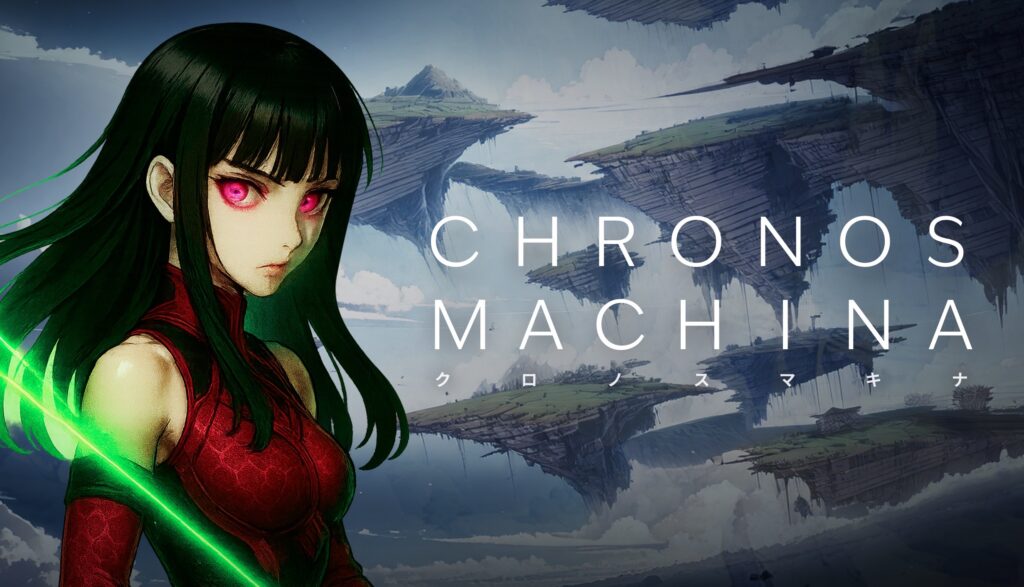
Nobumichi Kumabe: There were many reasons for making a game by myself, but at the heart of it was a desire to keep making games for hardcore users. I also couldn’t deny the impression that Japan is gradually falling behind compared to overseas and new Asian studios. Nowadays indie works can find success on STEAM so I decided to take on the challenge since I only have one life to live. I am currently developing a game titled CHRONOS MACHINA. I wanted to make a game around the mechanic “Chronobreak”, which is an ability of Ekko from League of Legends, so I set my goal as making a high-speed action game where you can change your position in the blink of an eye while keeping up the pressure (in League, “Chronobreak” allows allows Ekko to briefly rewind time, becoming untargetable and invulnerable, then teleporting to his position from 4 seconds prior).
But as a single developer, there is a limit to what you can do, so I can not make too many enemy types in the first place. Instead adding rogue-like elements to make it highly replayable. If the reception is good on release,I will add more variety of enemy types and other updates.
Stinger: can you tell us a bit more about the design process behind CHRONOS MACHINA, the idea and how your work on it goes?
Nobumichi Kumabe: Until now, I was mostly working on the proposal to get it approved, with only the thought that I wanted it to be an action game being set in stone. Also I want to make beautiful visuals so I developed it with UnrealEngine. But since I could not outsource the creation of the assets, I used assets from the store that I touched up myself.
Stinger: What are your plans for the future after CHRONOS MACHINA is finished?
Nobumichi Kumabe: I want to make more games, but I will keep updating CHRONOS after release. But, if sales are bad, I may not be able to survive, so I’ll have to consider reapplying for a job at another studio (laughs).
Stinger: Do you have any advice you want to give to new game designers?
Nobumichi Kumabe: I can`t make a big speech, but I think that when users smile and are surprised when they play games, this enriches someone`s life. But to achieve that, it costs enormous money, hard work and time. Customers don`t have to care about working conditions or the positions of developers, while a professional creator must also deal with the business side of things. To solve these contradictions, ideas are needed. Please keep struggling, worrying, and coming up with the best answers, and create good games for the world!
Stinger: Thank you so much for taking the time to do this interview. As a closing question, if people want to reach out to you or play your latest works, where can they contact you?
Nobumichi Kumabe: I am on X(twitter), or you can contact me by e-mail on my X`s bio.
I will set up CHRONOS MACHINA on Steam shortly, so you can also contact me via there.
Twitter (streaming): https://x.com/NofGaming
Twitch (streaming): https://www.twitch.tv/nof_kuma
Twitter (development): https://x.com/mikiriwing/
Youtube(development and stream): https://www.youtube.com/@nof_neko
Below you can find the original Japanese answers to my questions. The initial interview was done through mail, using online translators to communicate. For the final version of this article several translators that knew Final Fantasy and Stranger of Paradise were consulted to make sure the content was correctly and accurately translated. I want to take this moment once more to thank the community for helping with this, as well as thank Nobumichi Kumabe for taking the time to talk to me. Stranger of Paradise is a fantastic game that has indeed left a mark on many hardcore player’s hearts, and will hopefully continue to do so for many more years.
Thanks for that interview! Always fascinating to see the thoughts of a creator! And even more so when it’s a developer for an action game like this!
thanks for the interview